Showing posts with label ELD. Show all posts

Wednesday, March 14, 2018

Using Data to Support English Learners

There are various types of data we use in schools. The primary forms of data available are:
  • Formative - an ongoing set of daily and weekly observations. Generally gathered in the classroom.
  • Summative - tests such as ELPAC, CAASPP, placement tests, i-Ready, course grades
  • Demographic - home language, classification (IFEP, RFEP, EL), socioeconomic data
  • Educational History - prior schooling, primary language instruction
How do we use data to support our English Learners?

Classroom Teacher - Individualized support, in-class intervention
School - Student supports made available, scheduling, and programming
District - Allocation of resources, teachers to provide support where needed

Milpitas Unified School District has multiple ways of offering data to sites and teachers:
  • Illuminate
  • Aeries
  • WIN Report
  • California Dashboard
  • i-Ready
Classroom-level assessments for English Learners that can be used to help with placement, modifications, and interventions:
  • Gap Finder
  • Express Placement
We need to look at multiple data points to figure out what's best for students. One test on one day is not enough to get a picture of the whole students' abilities, understanding, and learning. Decisions about students' placement and supports can not be made based on a single point of data.

https://www.flickr.com/photos/limako/16018085673/in/photolist-qpsSNV-o6GNqp-6LJR4e-b4yzRz-9hxwV3-7GZENX-5yBFYF-7GZEoi-auLQLX-f7cBHd-dGQuK9-72Qq3g-7H4wEN-93LNbP-mbtJnM-fsWPFm-4oA2RL-9LzCmw-4YDuAH-pipvNk-5eMumr-4tetNG-dGQv3C-fDcP71-JZWM7-dGK5cv-qLu84o-7FMkAL-mbtMsK-4bDwcG-nm2s5h-6SYLJX-AkmzAU-7FMndG-7tNFDW-FAdr7-JLMw1V-dhbixM-oPRCi1-dVpDih-7pQSQ-bsprrW-JVe5MG-7JmUpH-4VAhSX-7JqPZQ-7gu651-aJuZ1r-6hq9UB-c5brpmSome questions to educators to consider:

  • How are you utilizing data to support your students? 
  • Are you looking at the whole student when planning instruction that will provide the greatest benefit to your English Learners? 
  • Are your planned interventions and scaffolding helping your student move closer to a deeper understanding of how English works, rather than simply providing them a crutch to get a grade?
  • What does each of your English Learners need help on? Are you using this information to design supports with purpose and intention? 
  • Do you notice any trends in the data? What is your EL subset's greatest need(s)?
Data utilization is a critical component of curriculum planning which helps ensure that we are maximizing class time to provide our ELs with instruction that not only allows them to understand the content we are delivering, but to move them closer to proficiency and self-sufficiency in the American educational system.

Wednesday, February 28, 2018

Integrated ELD vs Designated ELD: What's the Difference?

Throughout the day, English learners (ELs) are required to learn English (both conversational and academic) and content knowledge simultaneously. Integrated and Designated ELD are both critical parts of an English Learner's daily instruction. They both involve direct language instruction and help students to make connections between ELD and content standards in every core subject. Both types of ELD provide scaffolds for students to meet academic and language needs, yet remain intellectually challenging, interactive, and engaging.

Language awareness (learning about English works, not simply how to translate their words) is the main focus of the CA ELD standards because when students become conscious of how particular language affects meaning, they are able to develop more advanced levels of English. For example, learning about shades of meaning and code switching can be ways in which ELs can extend their understanding of how English works. This gives them more resources to be able to fully express themselves, make meaning, and have full access to the curriculum and opportunities to achieve their dreams.

Integrated ELD happens DURING each core subject and Designated ELD happens on it's own time, with an ELD teacher. Whatever content area you teach in, you are responsible for providing integrated ELD throughout the course of the week.

As a comprehensive approach to ELD, the English Language Arts/English Language Development (ELA/ELD) Framework for California Public Schools states:

"ELs at all English proficiency levels and at all ages require both integrated ELD and specialized attention to their particular language learning needs, or designated ELD" (p 119).


Even English only (EO) students benefit from direct language instruction!

How is Designated ELD unique?

  • Focus on ELD Standards and connect to content standards.
  • It is a protected time to develop language skills, building into and from content instruction.
  • Instruction focuses on meaning, forms, and functions of the English Language.
  • Uses frequent formative and corrective feedback for language development, not content learning. Content is secondary, and supports the language, but is not the primary objective.
  • Focus on providing extended opportunities for students to use English to interact in meaningful ways. The class should be full of opportunities for extended discourse.

How is Integrated ELD unique?

  • Focus is on content standards. ELD standards are integrated and connected to content.
  • ELD is provided throughout the day and through ALL diciplines (Humanities, STEAM, PE, etc.)
  • Instruction focuses on content learning and the academic language necessary for successful learning of the content, as well as transmission of that learning to others.
  • Focus on providing multiple opportunities to master the content learning.
Chapter 6 of the California ELA/ELD Framework provides "snapshots" of how Integrated and Designated ELD can work in the content areas in grades 6, 7, and 8, with a particular focus on ELA, science, and history/social science.

Wednesday, November 5, 2014

The "Turtle" Graphic

This graphic, which I have heard lovingly referred to as the "Turtle" graphic, is an excellent visualization of how the California English Language Development Standards and the California Common Core State Standards for English Language Arts and Literacy are integrated and interdependent.


Outer Ring
The outer ring of this graphic gives us the four overarching goals of ELA/Literacy and ELD instruction. California's goals for each student by the time they complete high school is to: have developed college and career readiness, attained the capacities of literate individuals, become broadly literate, and have acquired the skills for living and learning in the 21st century.
White Field
The white field surrounding the "turtle" is designed to represent the context in which high-quality instruction occurs. The ELA/ELD Framework states that the context in which students are learning should be motivating, engaging, respectful (so that students can take risks), integrated (across the disciplines), and intellectually challenging (regardless of language proficiency level).
Circling the Standards
The small blue circles surrounding the standards are are the 5 key themes of the standards: meaning making, language development, effective expression, content knowledge, and foundational skills. These five themes exist at every grade level and increase in rigor and complexity as the CCSS spirals progress.
Center
In the center of the graphic, at the heart of instruction are the CA CCSS for ELA and Literacy. The CA ELD standards are embedded in this center circle. The standards provide teachers with year-end outcome statements for a wide range of student knowledge and abilities. The standards guide instructional planning and observation of student progress. The CA ELD standards provide English Learners with full access to the CA CCSS for ELA/Literacy as well as other content areas. 

Thursday, July 31, 2014

The California ELD Standards

The following informational video by Sandra Orozco gives an overview of the California English Language Deveopment (ELD) Standards that were adopted in November 2012. It's a great introduction into how the standards are layed out and what the meaning of all of the new proficiency descriptors and color coding means.

Wednesday, March 19, 2014

LTELs and California Assembly Bill 2193

AB 2193 was passed in 2012. This bill defines our Long Term English Learners (LTELs). However, this criteria is not all-inclusive. Here's a breakdown of the basic criteria in this bill which defines an LTEL:
  • In grades 6-12 
  • 6+ years in US 
  • At the same proficiency level for two or more consecutive years 
  • At Far Below Basic or Below Basic on the CST, or any successor test 
Students "At Risk" of becoming LTELs are defined as:
  • In grades 5-11 
  • At the Beginning, Early Intermediate or Intermediate level on CELDT 
  • Scores in the 4th year at Far Below Basic or Below Basic on the CST, or any successor test 
Some of our students, though defined as our district as LTELs, are not defined by this bill as such. For example, a student that is at Intermediate one year and the next year goes to Below Basic, then the next year goes back up to Intermediate, is are not defined at an LTEL by this bill, although they have been in U.S. schools for more than 5 years.

What does being an LTEL mean for your students? LTEL students have needs that are very different from your other EL students. According to Dr. Kate Kinsella on the English 3D Website, LTELs:
  • Have lived most or all of their lives in the United States 
  • Are often orally bilingual and sound like native English speakers do not have well-developed academic literacy skills in English 
  • Often have developed habits of non-engagement, learned passivity, and invisibility in school 
  • Perform below grade level in reading and writing and, as a result, struggle in all content areas 
  • Have overall school performance is low, with poor grades and grade retention commonplace, making this population at high risk for dropping out 
How are we serving the unique and pressing needs of our LTEL population? When designing your lessons, are you ensuring that you have included a language objective that helps all students, especially your LTELs, move towards language proficiency? Do you know who the LTELs in your classroom are?

Assembly Bill No. 2193 

CHAPTER 427 

An act to add Sections 313.1 and 313.2 to the Education Code, relating to English learners.

[ Approved by Governor September 21, 2012. Filed with Secretary of State September 21, 2012. ]

LEGISLATIVE COUNSEL'S DIGEST

AB 2193, Lara. Long-term English learners.

Existing law requires each school district that has one or more pupils who are English learners, and, to the extent required by federal law, a county office of education and a charter school, to assess the English language development of each of those pupils in order to determine the pupil’s level of proficiency. Existing law requires the State Department of Education, with the approval of the State Board of Education, to establish procedures for conducting the assessment and for the reclassification of a pupil from English learner to English proficient.

This bill would define “long-term English learner” and “English learner at risk of becoming a long-term English learner” and would require the department to annually ascertain and provide to school districts and schools the number of pupils in each school district and school, as specified, who are, or are at risk of becoming, long-term English learners.

BILL TEXT

THE PEOPLE OF THE STATE OF CALIFORNIA DO ENACT AS FOLLOWS:

SECTION 1.

Section 313.1 is added to the Education Code, to read:

313.1.

For purposes of this article, the following terms have the following meanings:

(a) “Long-term English learner” means an English learner who is enrolled in any of grades 6 to 12, inclusive, has been enrolled in schools in the United States for more than six years, has remained at the same English language proficiency level for two or more consecutive years as determined by the English language development test identified or developed pursuant to Section 60810, or any successor test, and scores far below basic or below basic on the English language arts standards-based achievement test administered pursuant to Section 60640, or any successor test.

(b) “English learner at risk of becoming a long-term English learner” means an English learner who is enrolled in any of grades 5 to 11, inclusive, in schools in the United States for four years, scores at the intermediate level or below on the English language development test identified or developed pursuant to Section 60810, or any successor test, and scores in the fourth year at the below basic or far below basic level on the English language arts standards-based achievement test administered pursuant to Section 60640, or any successor test.

SEC. 2.

Section 313.2 is added to the Education Code, to read:

313.2.

(a) The department shall annually ascertain the number of pupils in each school district and school, including a school that is within the jurisdiction of a county office of education and a charter school, who are, or are at risk of becoming, long-term English learners, as those terms are defined in Section 313.1.

(b) The department shall annually provide the information described in subdivision (a) to school districts and schools.

Thursday, March 13, 2014

New MOOC from Understanding Language at Stanford University - FREE!

Happy Thursday colleagues and friends!

I wanted to share some information with you about a free online class I will be taking from Stanford University. I thought you might be interested in it too, since we're going full throttle into Common Core next year. Information about the course is below. It's FREE and the first assignments aren't due until March 20th, so there is still time to sign up. Please let me know if you choose to participate! I would love to have a study buddy for the course!


From Understanding Language at Stanford University:

A team from the Understanding Language initiative at Stanford University that includes Drs. Kenji Hakuta, Jeff Zwiers, and Sara Rutherford-Quach, is launching their second set of Massive Open Online Courses (MOOCs) on Thursday, March 6th. These MOOCs cover similar material but are split into two separate courses, one designed for elementary educators (i.e. PreK-5 grades), Constructive Classroom Conversations: Mastering Language for the Common Core State Standards (Elementary) and the other targeted at secondary educators (i.e. 6-12 grades), Constructive Classroom Conversations: Mastering Language for the Common Core State Standards (Secondary). The courses focus specifically on how educators – and particularly educators of English language learners- can foster the kind of rigorous student-to-student academic discussions required by the Common Core State Standards. An original version of these courses was offered last fall, with more than 2,000 teachers actively participating. Potential participants should have access to a K-12 classroom, as the course assignments will require them to listen carefully to real conversations among their students, reflect upon this discourse, and plan instruction accordingly. Both courses are free of charge, but if a participant would like to receive an official record of completion from Stanford University with the approximate number of professional development hours to which the course is equivalent, he or she may pay a modest fee to do so.

Wednesday, January 29, 2014

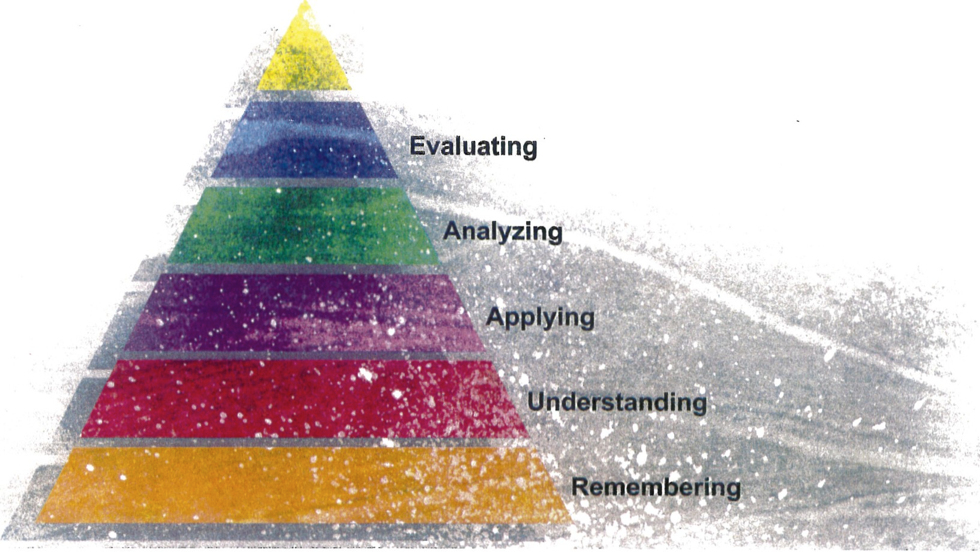
Scaffolding Content Instruction for English Learners with DOK and Bloom’s Taxonomy

Scaffolding Content Instruction for English Learners with DOK and Bloom’s Taxonomy

 This guide provides teachers a tool to scaffold instruction for
         English learners organized by proficiency levels to target
         questions and responses with the support of sentence frames.
         Based on Bloom 's Taxonomy of higher order thinking skills,
         these supports develop oral language and writing development
         in remembering, comprehending, applying, analyzing,
         evaluating, and creating. Questions and sentence writing
         frames modeled by the teacher can help English learners:

  • Assess, understand and master critical academic concepts
  • Increase acquisition of academic language
  • Move beyond simple assignments of recalling information to higher level thinking tasks, such as analysis, evaluation, and creating.

              Click here to view the Scaffolding tool.
              
              If you would like a copy of the tool, please contact Catherine Waslif
              cwaslif@musd.org at ext. 6014.

Tuesday, January 7, 2014

Goals for the MUSD English Learner Program

  • Ensure that all English Learners access and master the core
  • Develop high self-image and cross-cultural understandingin English Learners by learning English while validating and valuing home language and culture.
  • Develop multi-cultural proficiency in all MUSD students.
  • Promote positive leadership and self-esteem of English Learners.
  • Ensure active participation of parents of English Learners and Reclassified English Proficient (RFEP) students in their children’s education and promotion/graduation rates.
  •  Increase participation of English Learners in Advanced Placement, Honors, GATE, and promotion/graduation rates.
  • Ensure English Learners make measurable progress to master the English language as efficiently and effectively as possible.
From the MUSD Intranet ELL/ELD Tab

Tuesday, November 26, 2013

Worldwide Woofs


Polite Speech

In ELD, we have to explicitly teach polite speech. For many newcomers, it is some of the first language we teach, but after that first year, how often do we reinforce what we've already taught? Here's a video from Kid President and Soul Pancake about "20 Things We Should Say More Often". It is full of all of the good stuff you want kids to remember to say ( for ELs, this video is especially helpful, because the words he's telling us to say get written on the chalkboard behind him) and a few of the light-hearted things people say that make the video awesome for all kids, EL, mainstream, or otherwise. Enjoy and Happy Thanksgiving!

Trying Out Blended Learning in ELD

Tuesday, November 12, 2013

Breaking News English

Breaking News English
http://www.breakingnewsenglish.com/

This site has over 1750 free lessons on current events for English Language Learners. Many of the lessons would work well for Below Level Learners as well. The lessons are marked as "easier" or "harder" with activities geared for several levels (U.K. EL levels of 0-6, with "easier" being 0-3 and "harder being 4-6). These short articles are a good place to start if you are looking to incorporate more informational text into your lessons. The articles cover a wide variety of topics, from science, to politics, to lifestyle news.

Monday, November 11, 2013

NEW English Language Development Standards for California Public Schools

A couple of resource links for you on the new ELD Standards for California... Just some light reading ;)

ELD Overview and Proficiency Level Descriptors

English Language Development Standards for Grade 7

English Language Development Standards for Grade 8

We will continue using CELDT (California English Language Development Test) as an assessment until the ELPAC (English Language Proficiency Assessment for California) is made available (2015?).

California English Language Development Standards - Implementation Plan (Sept. 2013)


Sunday, October 27, 2013

Welcome!

Hi Everyone!

I am going to be posting my tips for helping your English Language Learners here in this blog. Please feel free to comment and ask questions on any post. If you have any useful resources that deal with the topic at hand, please post those, too! I will be keeping a running list of resources here:

https://docs.google.com/a/musd.org/document/d/1t1oFVqn8m-HGu7vICzQJ5jg-VfGpTjINsq07Bt1YRII/edit?usp=sharing

Currently, this list is only available to people at MUSD with the link, but if you're not part of MUSD and you'd like to take a peek, just let me know and I'll share it with you!

That's it for now!